Autumn · Blog
How to Organize a Small Pantry, Step by Step
DisclosureSome links on this site are affiliate links, which means we may earn a commission at no extra cost to you. Read our affiliate disclosure
Clear containers, simple labels and turntables for deep corners: a step-by-step way to organize a small pantry so you can see what you have.
Updated
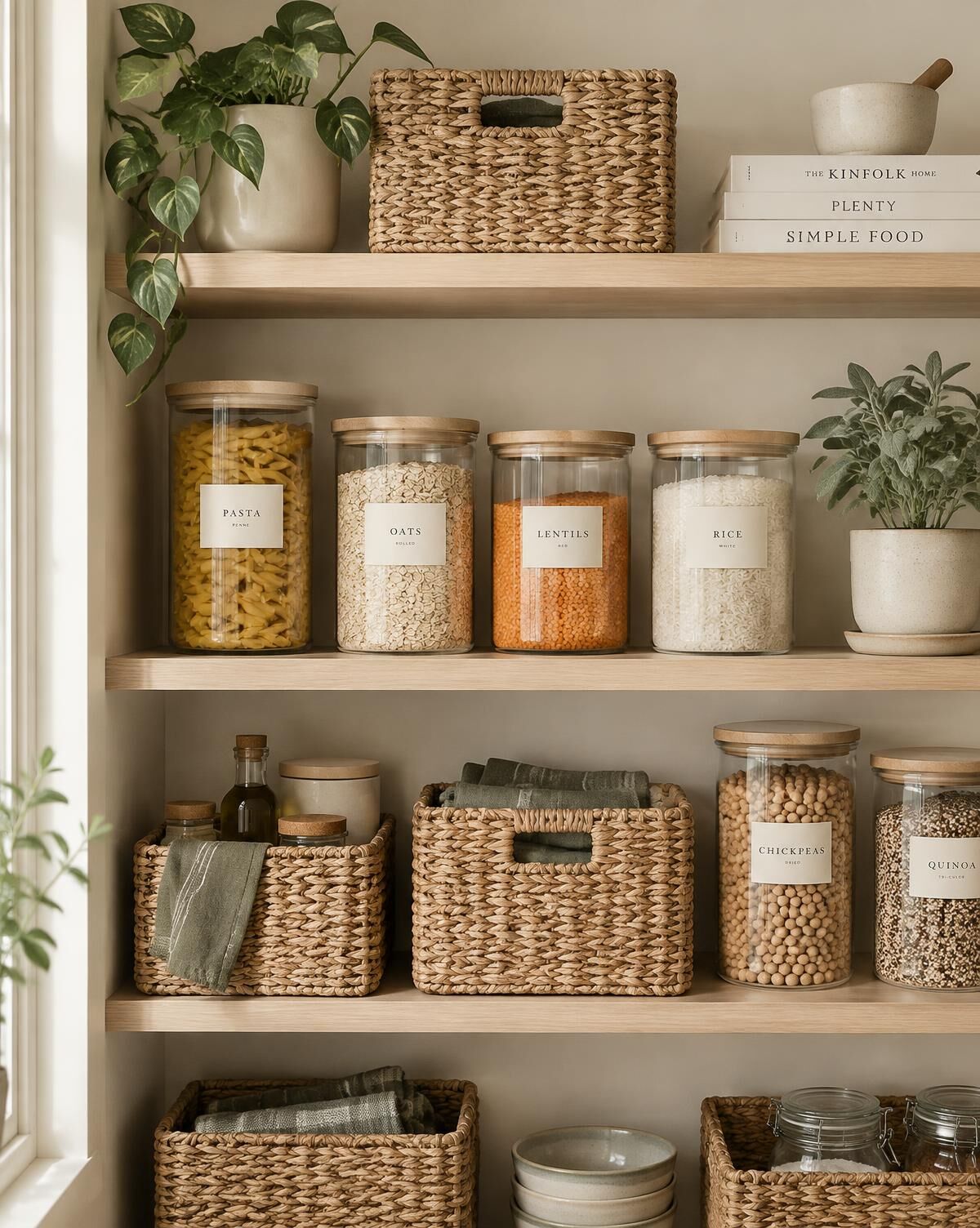
Why small pantries feel full so quickly
A small kitchen rarely runs out of food. It runs out of places to see the food. Half-open packets lean against each other, jars drift to the back of the cabinet and the same spice gets bought three times because the first two are hiding behind a box of crackers.
The fix is rarely more space. It is usually a clearer system: fewer odd-shaped packets, things grouped by how you actually cook and the back of each shelf brought within reach.
Step 1: Clear out one shelf at a time
Before buying anything, take everything out of one shelf. Check dates, combine duplicates and set aside anything you know you won't use. Wipe the shelf down while it is empty; it is the easiest moment you will get. Then move on to the next shelf.
Step 2: Sort into a few broad zones
As you go, sort what is left into a few simple groups: breakfast, baking, grains and pasta, snacks, cans and jars, and spices. These groups become the zones of your pantry, so keep them broad. A handful of zones you can remember works better than a dozen you can't.
Step 3: Decant everyday staples into clear containers
Moving dry goods out of their packets and into clear containers makes a small pantry much easier to read. Square or rectangular containers stack neatly, and clear ones show the level at a glance, so the shopping list is easier to write.
The Vtopmart set has 24 stackable containers in four sizes, with side-locking airtight lids and 24 reusable labels, enough to cover cereal, flour, snacks and other dry goods in one go. For a larger reset, or if you also prep meals ahead, the 48-piece set adds more containers with airtight lids and its own labels.
You don't need to decant everything. Start with the things you use most often and buy in bulk, such as oats, rice, pasta and flour. Keep anything you use rarely in its original packaging, grouped in a basket or bin.
Step 4: Label simply
Labels are what keep a system working once the novelty wears off. Keep them short and consistent: the name of what is inside, written the same way every time. If a product has cooking instructions or a use-by date you need, cut that part of the packet out and tuck it inside the lid or tape it to the back of the container.
Face the labels outward and put the tallest containers at the back. A small label on the shelf edge for each zone helps everyone in the house put things back in the right place.
Step 5: Use turntables for deep corners
Deep corner cabinets are where things go in at the back and never come out again. A turntable brings the back of the shelf to the front with a quick spin.
The mDesign 2-tier turntables come as a pair, each with two rotating levels, so small jars and bottles at the back of a cabinet come forward with a turn; they are a good match for spices, oils and sauces. For bulkier things, the mDesign deep turntable is split into five sections and spins all the way around, and it works on a pantry shelf as well as in the fridge or under the sink.
How to organize a small pantry with deep shelves
On a deep shelf, think in rows. Keep the front row for what you use every day and the back row for backup stock of the same things. When you put new groceries away, place them behind what is already there and bring the older items forward. This is first in, first out: the oldest food gets used first, and less is forgotten at the back.
Rarely used items can share one basket or bin that slides out like a drawer, so the back of the shelf is never out of reach.
Step 6: Give every shelf a job
Once your zones are set, decide where each one lives. Keep the things you reach for daily at eye level. Heavier items, such as cans and bottles, belong on lower shelves. Baking supplies and occasional ingredients can go higher up.
If you share the kitchen, a single snack shelf at a reachable height saves a lot of questions. Leave a little empty space on each shelf too, so the next grocery run has somewhere to go.
Keep it going with a five-minute weekly tidy
No pantry system stays perfect on its own. Before the weekly grocery run, refill the containers, move older items to the front, wipe any spills and note what is running low. It keeps the whole pantry readable and helps the shopping list write itself.
For a shorter weekend version that covers drawers as well, see the pantry and drawer reset. The same approach works for dresser drawers and for making a small space feel cozy and organized, and more organizing finds are in the NEATLY aisle. Start with one shelf this weekend. Prices and availability change, so check the current price at the retailer before you buy.
Small pantry FAQs
Should I decant everything?
No. Start with what you use most and buy in bulk, such as oats, rice, pasta and flour. Keep rarely used items in their packaging, grouped in a basket or bin.
What containers suit a small pantry?
Square or rectangular containers stack neatly, and clear ones show the level at a glance.
What works for deep corner shelves?
A turntable brings the back of the shelf to the front with a quick spin.
How do I keep cooking instructions after decanting?
Cut that part of the packet out and tuck it inside the lid, or tape it to the back of the container.
How often should I tidy the pantry?
Spend about five minutes before the weekly grocery run refilling containers, moving older items forward, wiping spills and noting what is low.
In this post
Shop the post

Vtopmart Airtight Food Storage Containers with Lids, 24 pcs
- Why we love it:
- Stackable containers in four sizes with side-locking airtight lids and 24 reusable labels.
- Perfect for:
- A pantry reset for cereal, flour, snacks and dry goods.
Check pricevia Amazon
Shop Now (opens in a new tab)
48-Piece Airtight Food Storage Container Set with Lids and Labels
- Why we love it:
- Containers with airtight lids and labels, so the pantry stays easy to read at a glance.
- Perfect for:
- Pantry resets and meal-prep weeks.
Check pricevia AliExpress
Shop Now (opens in a new tab)
mDesign 2-Tier Lazy Susan Turntable, 9", 2 Pack, Clear/Chrome
- Why we love it:
- Two-level rotating turntables that bring items from the back of a cabinet or shelf to the front.
- Perfect for:
- Spices, small jars and kitchen cabinets.
Check pricevia Amazon
Shop Now (opens in a new tab)
mDesign Deep Lazy Susan Turntable, 5 Divided Sections, Clear
- Why we love it:
- A deep, divided spinner that rotates a full 360° so you can grab what you need.
- Perfect for:
- Pantry shelves, the fridge and under the sink.
Check pricevia Amazon
Shop Now (opens in a new tab)Keep reading
More posts
Autumn
How to Organize Dresser Drawers for Good
Empty, edit, file-fold and divide: a step-by-step way to organize dresser drawers so they close easily and stay tidy after laundry day.
Read the post →Holidays
Practical Holiday Gift Ideas People Actually Use
Practical gift ideas sorted by routine: warm layers, travel helpers and soft comforts for the commuter, the traveler and the homebody.
Read the post →Holidays
How to Pack a Suitcase with Packing Cubes
Plan by outfit, roll soft clothes, fill cubes by category and keep toiletries and cables separate: how to pack a suitcase with packing cubes.
Read the post →Winter
Welcoming Winter: Small Comforts for the Cold Months
Shorter days are an invitation to slow down: a few small comforts for warmth, light and gentle evening rituals.
Read the post →Holidays
Holiday Evenings at Home: Light, Warmth and Fewer To-Dos
Host with less, let warm light do the decorating and keep some evenings quiet: a calmer way through the busy season.
Read the post →Back to School
Back to Routine: Settling Into a New Desk or Dorm
A new space can feel unsettled at first: simple ways to build calm routines, a warm corner to study and better rest.
Read the post →